
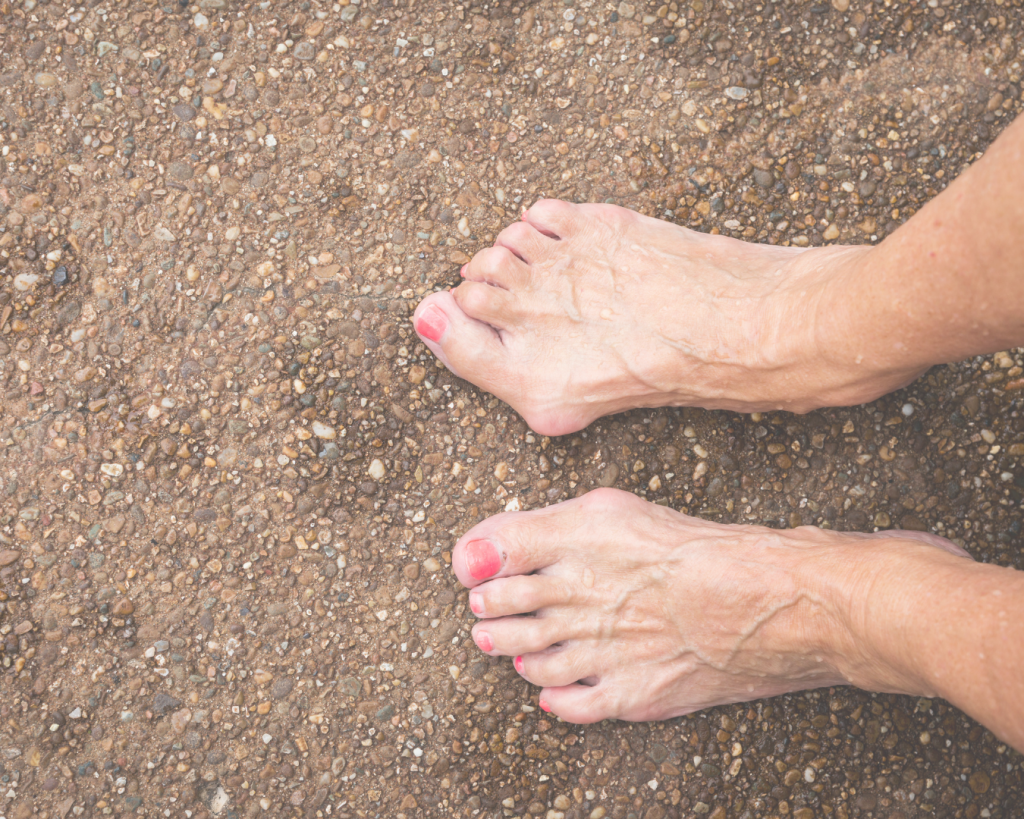
What is Hammertoe?
Hammertoe is a deformity of the second, third, fourth or fifth toes. In this condition, the toe is bent at the middle joint, resembling a hammer. Left untreated, hammertoes can become inflexible and require surgery. People with hammertoe may have corns or calluses on the top of the middle joint of the toe or on the tip of the toe. They may also feel pain in their toes or feet and have difficulty finding comfortable shoes. Causes of hammertoe include improperly fitting shoes and muscle imbalance.
Hammertoe Treatment in Garland TX & Wylie TX
Painful or Bent Toes? Hammertoes Can Become More Difficult to Treat Over Time
A toe that has started curling or bending downward may be more than a cosmetic concern. Hammertoe is a common foot deformity that can cause toe pain, rubbing inside shoes, corns, calluses and increasing difficulty finding comfortable footwear.
At Foot & Ankle Medical Clinic in Garland, TX, Scott Nelson, DPM provides diagnosis and treatment for hammertoes and other painful toe and foot conditions. At our Wylie location, Hang Nguyen, DPM sees patients for hammertoe treatment as well.
Early hammertoes may remain flexible, meaning the affected toe can still be moved or straightened. As the condition progresses, the muscles and tendons can tighten and the toe may eventually become rigid.
That is one reason it makes sense to have a painful or increasingly bent toe examined sooner rather than waiting until it becomes difficult to move.
If you are looking for hammertoe treatment in Garland TX or Wylie TX, call Foot & Ankle Medical Clinic at (972) 414-9800 or request an appointment online.
What Is a Hammertoe?
A hammertoe is a deformity that causes one of the smaller toes to bend abnormally instead of resting in a relatively straight position.
Hammertoes most commonly involve the second, third, fourth or fifth toes.
The abnormal bend often develops around the middle joint of the toe, giving it a raised or curled appearance.
In the early stages, the toe may still be flexible enough to straighten manually. Over time, however, the muscles and tendons can become tighter and the joint may become increasingly rigid.
The National Library of Medicine provides additional general information about hammertoes and their symptoms.
What Causes Hammertoes?
Hammertoes often develop because the muscles and tendons responsible for holding the toe in its normal position become unbalanced.
Several factors may contribute.
Shoes That Crowd the Toes
Shoes that are too short, narrow or tight in the toe box can force the toes into a bent position.
High heels can also move body weight toward the front of the foot and crowd the toes.
Wearing tight shoes does not necessarily explain every hammertoe, but footwear can contribute to symptoms and make an existing deformity more uncomfortable.
Foot Structure and Muscle Imbalance
The structure and mechanics of the foot can affect the way pressure is distributed across the toes.
When muscles or tendons pull unevenly, one or more toes may gradually begin to bend.
Other Foot Deformities
Hammertoes may occur along with other structural foot problems, including bunions.
Changes in the position of the big toe can create additional crowding and pressure on neighboring toes.
Age and Other Health Factors
Hammertoes can become more common as people get older, although adults of many ages can develop them.
Certain neurological, muscular or arthritic conditions may also affect toe position.
What Does a Hammertoe Look and Feel Like?
Some hammertoes are noticeable before they become particularly painful.
Common signs and symptoms include:
- A toe that bends or curls downward
- A raised middle toe joint
- Pain when wearing shoes
- Rubbing or irritation over the bent joint
- Corns on top of the toe
- Calluses on the tip or bottom of the toe
- Redness or inflammation
- Difficulty moving or straightening the toe
- Pain while walking
- Difficulty finding shoes that fit comfortably
Corns and calluses frequently develop because the bent toe repeatedly rubs against footwear or places increased pressure against the ground.
MedlinePlus notes that hammertoes commonly cause corns over the bent joint and calluses on areas exposed to pressure. You can read more about corns and calluses and how pressure contributes to them.
Flexible vs. Rigid Hammertoe
One of the most important things Dr. Nelson and Dr. Nguyen will evaluate is whether the hammertoe is still flexible or has become rigid.
Flexible Hammertoe
In an earlier-stage hammertoe, the toe can usually still be moved or manually straightened.
Conservative treatment may be particularly useful at this stage for reducing pressure, improving comfort and helping prevent the deformity from becoming more troublesome.
Rigid Hammertoe
As a hammertoe progresses, the joints and surrounding tissues may become increasingly stiff.
Eventually, the toe may remain fixed in the bent position.
A rigid hammertoe can create ongoing shoe pressure, painful corns and difficulty walking comfortably. More advanced deformities may require surgical correction when conservative treatment no longer provides adequate relief.
How Is a Hammertoe Diagnosed?
Hammertoe can usually be identified during a physical examination.
At your appointment, Dr. Nelson and Dr. Nguyen may examine:
- The position of the affected toe
- Whether the toe is flexible or rigid
- Areas of pain or tenderness
- Corns and calluses
- Skin irritation
- Range of motion
- Foot structure and alignment
- How your shoes fit
- Other toe deformities, including bunions
X-rays may sometimes be used to evaluate the bones and joints, particularly when the deformity is more advanced or surgery is being considered.
Hammertoe Treatment in Garland TX
Treatment depends on how far the hammertoe has progressed, how much discomfort it causes and whether the toe remains flexible.
At Foot & Ankle Medical Clinic, Dr. Scott Nelson and Dr. Hang Nguyen generally consider conservative treatment when appropriate before recommending surgery.
Wider, Better-Fitting Shoes
One of the simplest ways to reduce hammertoe discomfort is to make sure your toes have enough room.
Shoes with a wide, deep toe box can reduce rubbing and pressure against the raised portion of the toe.
Avoid shoes that force the toes into a cramped or curled position.
Padding for Corns and Pressure Areas
Protective padding may help reduce friction between the hammertoe and the inside of the shoe.
Padding should relieve pressure rather than make the shoe tighter.
People with diabetes, neuropathy or circulation problems should be especially cautious about treating corns or calluses themselves and should have painful pressure areas evaluated professionally.
Toe Exercises and Stretching
When the hammertoe remains flexible, certain stretches or exercises may help maintain movement in the toe and surrounding muscles.
The appropriate exercises depend on the individual foot and the stage of the deformity.
Custom Orthotics
For some patients, abnormal foot mechanics contribute to pressure on the toes.
Custom orthotics may be recommended to improve support and redistribute pressure through the foot.
Learn more about custom orthotics at Foot & Ankle Medical Clinic.
Treating Corns and Calluses
Simply removing a painful corn does not correct the hammertoe that caused the pressure.
When corns or calluses repeatedly return in the same location, addressing the underlying toe deformity and shoe pressure becomes important.
Does a Hammertoe Require Surgery?
No. Not every hammertoe needs surgery.
Many patients can manage symptoms with footwear changes, padding, orthotics and other conservative treatments.
Surgery may become an option when:
- The toe has become rigid
- Pain continues despite conservative treatment
- Corns or pressure sores repeatedly develop
- The deformity interferes with walking
- Finding comfortable shoes becomes increasingly difficult
- The position of the toe continues to worsen
Several surgical techniques can be used depending on the type and severity of the hammertoe.
Treatment may involve adjusting tendons, correcting the position of the joint or bone, or stabilizing the toe in a straighter position.
Surgery should be based on the symptoms and functional problems caused by the hammertoe, not simply the appearance of the toe.
For general information about surgical correction, the National Library of Medicine provides a patient guide to hammertoe repair.
You can also learn more about foot and ankle surgery at Foot & Ankle Medical Clinic.
Why Treat a Hammertoe Before It Gets Worse?
Hammertoes tend to become more rigid as the surrounding muscles, tendons and joints adapt to the abnormal toe position.
Early treatment cannot necessarily make every hammertoe disappear, but addressing pressure and discomfort while the toe remains flexible may provide more conservative treatment options.
Waiting until a hammertoe becomes severely painful or fixed can make treatment more complicated.
Consider seeing a podiatrist if:
- Your toe is becoming increasingly bent
- Shoes rub against the toe
- You repeatedly develop corns or calluses
- Walking causes toe pain
- The toe is becoming difficult to straighten
- You are changing the way you walk because of discomfort
- The deformity is getting progressively worse
Hammertoes, Bunions & Other Toe Deformities
Hammertoes do not always occur by themselves.
A patient may also have a bunion, painful corns, calluses or other changes in the alignment of the toes.
Rather than treating each pressure point individually, Dr. Nelson and Dr. Nguyen can examine the overall structure of the foot and determine which problems are contributing to your symptoms.
That is particularly important when a corn or painful spot keeps returning after temporary treatment.
See a Podiatrist for Hammertoe Treatment in Garland TX
If a bent or curled toe is beginning to hurt, rub inside your shoes or interfere with walking, Scott Nelson, DPM and Hang Nguyen, DPM can evaluate the problem at Foot & Ankle Medical Clinic in Garland, Texas.
Dr. Nelson is a board-certified podiatrist with more than 20 years of experience treating foot and ankle conditions, including hammertoes, bunions and other structural foot deformities.
Our goal is to determine what is causing your symptoms and use the least-invasive treatment that makes sense for your individual condition whenever possible.
Foot & Ankle Medical Clinic of Garland
3930 Naaman School Road, Suite C
Garland, TX 75040
(972) 414-9800
Our Garland podiatry office is located near President George Bush Turnpike and Firewheel Town Center and serves patients from Garland and surrounding communities.
Visit our Garland Foot & Ankle Medical Clinic page for office information and directions.
See a Podiatrist for Hammertoe Treatment in Wylie TX
Foot & Ankle Medical Clinic of Garland
2300 FM 544, Suite 230,
Wylie, TX 75098
(972) 414-9800
Our Wylie podiatry office is located near Wylie High School and serves patients from both Dallas, Collin County and Rockwall County.
Visit our Wylie Foot & Ankle Medical Clinic page for office information and directions.
Frequently Asked Questions About Hammertoes
Can a hammertoe be straightened without surgery?
A flexible hammertoe may respond to conservative measures that reduce pressure and maintain movement, including footwear changes, padding, stretching and orthotics when appropriate. A rigid hammertoe generally cannot simply be straightened permanently with exercises or shoe changes.
Will a hammertoe go away on its own?
Hammertoes generally do not correct themselves once the structural deformity develops. Symptoms may improve with conservative treatment, particularly during the earlier flexible stage.
What kind of shoes are best for hammertoes?
Look for shoes with adequate length and a wide, deep toe box. The toes should be able to rest comfortably without rubbing the top or front of the shoe.
Why does my hammertoe keep getting a corn?
The raised joint of a hammertoe can repeatedly rub against the inside of the shoe. That friction and pressure can cause the skin to thicken and form a corn.
When should I see a podiatrist about a hammertoe?
Schedule an evaluation if the toe is painful, increasingly bent, developing recurring corns or calluses, becoming difficult to straighten or making it harder to wear shoes comfortably.
Is hammertoe surgery always necessary?
No. Surgery is typically considered when symptoms are significant and conservative treatment is no longer providing adequate relief, particularly when the toe has become rigid.
Schedule Hammertoe Treatment in Garland, TX
You do not have to wait until a hammertoe becomes rigid or extremely painful before having it evaluated.
Early attention may provide more options for reducing pressure, improving comfort and managing the deformity conservatively.
If you need hammertoe treatment in Garland TX, schedule an appointment with Scott Nelson, DPM or Hang Nguyen, DPM at Foot & Ankle Medical Clinic.
Call (972) 414-9800 or request an appointment online today.