
Diabetic Foot and Wound Care by a Podiatrist
Because diabetes can lead to diabetic ulcers and peripheral neuropathy, people living with diabetes need expert podiatric care. For those looking for diabetic foot and wound care in Garland and Wylie TX – seeking a diabetic foot doctor (or podiatrist) at either Foot & Ankle Medical Clinic location is a wise decision.
Continual and elevated blood sugar levels can cause the nerves in the feet to stop working, particularly the nerves that are responsible for “feeling”. We call these nerves sensory nerves. Once a nerve has lost its ability to deliver sensory signals, you can never get that back. Controlling your blood sugars is the number one thing that will keep complications from diabetes away from your feet. Keeping levels averaging below 126 mg/dl can keep this loss of feeling from developing in your feet.
Neuropathy
The loss of feeling is called Peripheral neuropathy. Imagine, not being able to tell where your feet are unless looking at them. How about walking across an asphalt parking lot in the summer and having the bottom of your feet burn off because you could not feel them. How about stepping into a shower where the water is too hot and burns your feet as well. Peripheral neuropathy can cause this very thing to happen. Again, tight control of your blood glucose levels will keep this from developing.
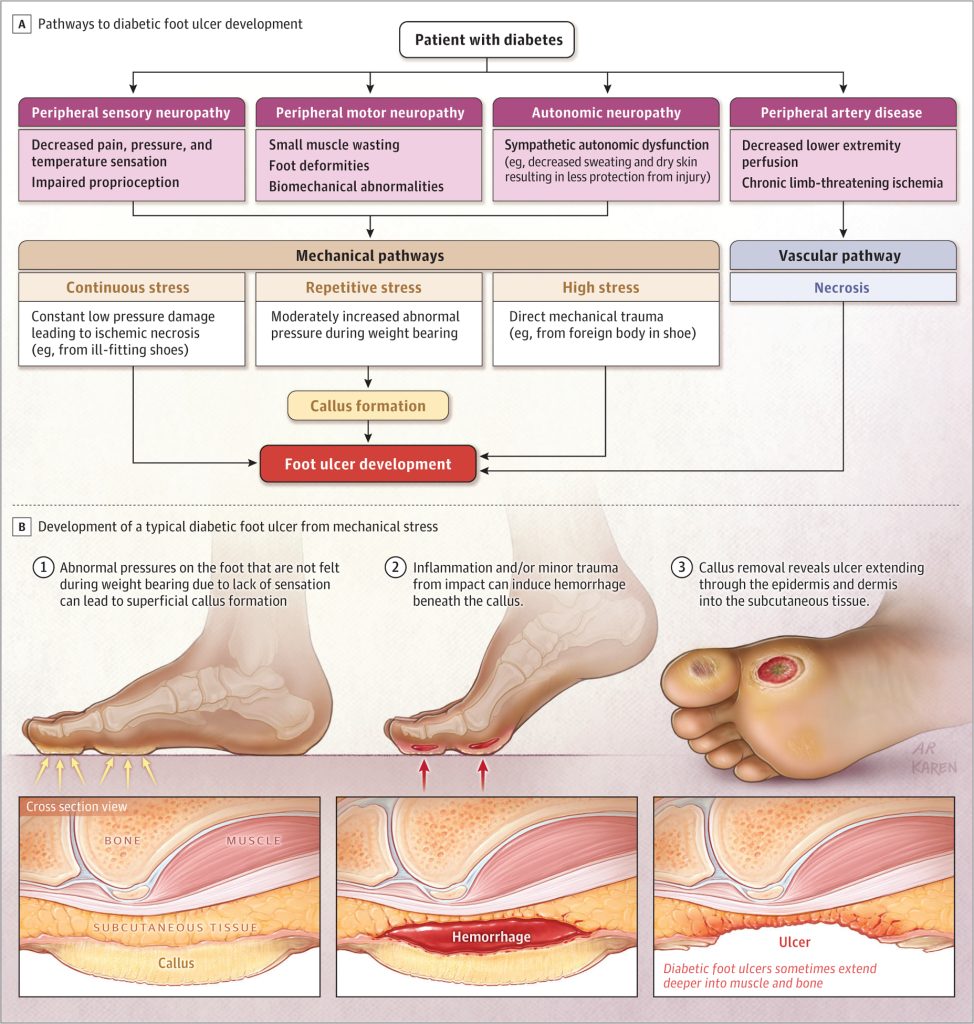
Ulcers are common once peripheral neuropathy has set in. You have lost the ability to feel your feet, so the bad fitting shoe can cause an open sore to develop in your foot, but you have no idea it’s happened until it’s too late.If you notice an open wound on your foot, see me right away. These open sores can become infected quickly. This infection may move to bone necessitating an amputation of a portion of your foot.
Dr. Nelson and Dr. Nguyen recommend that diabetic patients inspect their feet daily. If unable to see the bottom of your foot, use a mirror placed on the ground to look at your feet. You might even wear white socks only in the event that you develop a sore, you will see the blood on the sock and know that something is not right. Remember that you will probably not feel the ulcer develop.
Diabetic Foot & Wound Care in Garland & Wylie, TX
Diabetes can affect the nerves, circulation, skin and healing ability of your feet. As a result, even a small blister, cut or pressure spot can sometimes become a much larger problem.
At Foot & Ankle Medical Clinic, our podiatrists provide comprehensive diabetic foot care at both of our North Texas locations. Scott Nelson, DPM sees patients at our Garland, TX office. Meanwhile, Hang Nguyen, DPM provides diabetic foot and wound care at our Wylie, TX location.
Regular podiatric care can help identify problems early. Additionally, our doctors treat diabetic foot wounds, ulcers, neuropathy-related concerns and other conditions that can place the feet at risk.
We use the most advanced diagnostic tools and proven treatment solutions for their patients. Scott Nelson, DPM in Garland, and Hang Nguyen, DPM in Wylie are both trusted, skilled doctors that have years of experience with patients needing diabetic foot care. Call either podiatry office at (972) 414-9800 to speak with a member of our team and book your appointment today.
How Can Diabetes Affect Your Feet?
Over time, diabetes can damage nerves and blood vessels in the feet.
Diabetic neuropathy may cause:
- Numbness
- Tingling
- Burning
- Pain
- Reduced ability to feel temperature or pressure
Because sensation may decrease, you might not immediately notice a blister, cut or sore.
In addition, diabetes can affect circulation. Reduced blood flow may make some wounds more difficult to heal.
Therefore, a minor injury can become more serious if it goes unnoticed or develops an infection. The National Institute of Diabetes and Digestive and Kidney Disease, or NIDDK, explains that neuropathy and reduced blood flow are two major reasons people with diabetes face an increased risk of foot ulcers and other complications.
Diabetic Foot Ulcers & Wound Care
A diabetic foot ulcer is an open sore or wound that often develops in an area exposed to pressure or repeated friction. Because neuropathy can reduce sensation, some diabetic ulcers cause surprisingly little pain.
However, the absence of pain does not mean the wound is harmless.
In fact, an untreated wound may become infected or extend into deeper tissues. Therefore, early evaluation matters. A great reference is this Diabetic Ulcer Review by Armstrong et al., JAMA 2023.
MedlinePlus notes that diabetic foot ulcers may take weeks or months to heal and recommends reducing pressure on the wound while following a medical treatment plan.
When Should You See a Podiatrist?
If you have diabetes, contact your healthcare provider promptly if you notice:
- A cut or blister that is not healing
- An open sore
- New redness or warmth
- Swelling
- Drainage
- Bleeding
- Skin discoloration
- A callus with blood underneath it
- Increasing pain
- A new area of numbness
- A change in the shape of your foot
Additionally, seek prompt medical attention for signs of infection, especially spreading redness, pus, increasing warmth, fever or chills. Do not wait for a wound to become painful. Neuropathy may prevent you from feeling a serious problem.
What Does Diabetic Wound Care Involve?
Treatment depends on the location, depth and cause of the wound. When you first come to our office, we will use the latest technology to perform a comprehensive neurologic, vascular and orthopedic exam.
Dr. Nelson or Dr. Nguyen may evaluate:
- The wound itself
- Circulation in the foot
- Sensation and signs of neuropathy
- Areas of excessive pressure
- Foot structure
- Signs of infection
- Shoes and other factors that may contribute to the wound
Then, treatment may include wound cleaning and dressings, pressure reduction, footwear changes, offloading or other appropriate measures.
In some cases, your podiatrist may remove unhealthy or dead tissue from the wound through debridement. However, every wound requires an individualized approach.
Once the wounds are healed, patients are regularly followed up with to stay on top of foot health. This obviously helps avoid future problems. So, if you have a non-healing wound on your foot, ankle or leg especially if you’re diabetic, we strongly recommend that you schedule an appointment to see us.
Reducing Pressure on a Diabetic Foot Wound
Pressure can make it harder for a foot ulcer to heal.
Therefore, reducing pressure on the affected area often becomes an important part of treatment.
Depending on the wound, your podiatrist may recommend specialized footwear, padding, a walking device or another method of offloading the area.
For selected patients, custom orthotics may also help redistribute pressure after the wound has healed or when preventing recurring pressure areas becomes part of the treatment plan.
Learn more about our Custom Orthotics services.
Daily Diabetic Foot Care
Good daily habits can help you identify problems before they become more serious.
If you have diabetes:
- Check your feet every day
- Look at the bottoms of your feet and between your toes
- Watch for cuts, blisters, redness or swelling
- Wash your feet in warm, not hot, water
- Dry your feet carefully
- Wear properly fitting shoes and socks
- Avoid walking barefoot
- Check the inside of your shoes before putting them on
- Keep your diabetes management plan on track
If you cannot easily see the bottoms of your feet, use a mirror or ask someone to help.
Also, do not cut corns or calluses yourself or use medicated corn-removal products without professional guidance. Diabetes can make small skin injuries much more significant.
NIDDK recommends daily foot inspection and regular foot examinations as part of diabetes care.
Diabetic Neuropathy & Numb Feet
Neuropathy deserves special attention because it can change the warning system your feet normally provide.
For example, you may not feel:
- A blister forming
- A shoe rubbing
- A small object inside your shoe
- A cut
- Excessive heat
- A pressure sore developing
Therefore, visual inspection becomes particularly important when sensation decreases.
If you have burning, tingling or numbness in your feet, learn more on our Neuropathy & Nerve Disorders page.
Diabetic Foot Care in Garland, TX
Patients looking for diabetic foot care in Garland, Texas can schedule an appointment with Scott Nelson, DPM.
Dr. Nelson provides diabetic foot examinations, wound evaluation and treatment for foot conditions that may place diabetic patients at increased risk.
Foot & Ankle Medical Clinic of Garland
3930 Naaman School Road, Suite C
Garland, TX 75040
(972) 414-9800
Visit our Garland Office page for directions and additional information.
Diabetic Foot Care in Wylie, TX
Patients needing diabetic foot care in Wylie, Texas can see Hang Nguyen, DPM at Foot & Ankle Medical Clinic.
Dr. Nguyen evaluates diabetic foot problems, wounds, neuropathy-related concerns and other conditions affecting the feet and ankles.
Foot & Ankle Medical Clinic of Wylie
2300 FM 544, Suite 230
Wylie, TX 75098
(972) 414-9800
Visit our Wylie Office page for directions and additional information.
Frequently Asked Questions About Diabetic Foot Care
Why are foot wounds more serious when you have diabetes?
Diabetes can reduce sensation and affect circulation. Therefore, a patient may not notice an injury immediately, and some wounds may heal more slowly or become infected.
Should people with diabetes see a podiatrist even if their feet do not hurt?
Regular foot examinations can be valuable, particularly for patients with neuropathy, circulation problems, previous ulcers or changes in foot structure. Remember, reduced sensation means a serious problem may not cause much pain.
Can I treat a diabetic foot ulcer at home?
A diabetic foot ulcer should receive professional medical evaluation. Follow your healthcare provider’s wound-care instructions rather than trying to treat a significant ulcer on your own.
How often should I check my feet?
Check your feet every day for cuts, sores, blisters, swelling, redness and other changes.
Schedule Diabetic Foot & Wound Care
If you have diabetes, do not ignore a new sore, blister, wound or change in your feet.
Early attention can help prevent a small problem from becoming much more difficult to treat.
At Foot & Ankle Medical Clinic, Scott Nelson, DPM provides diabetic foot and wound care in Garland, while Hang Nguyen, DPM treats patients at our Wylie location.
Call (972) 414-9800 or request an appointment today.