
Foot and Ankle Surgeons in Garland and Wylie TX
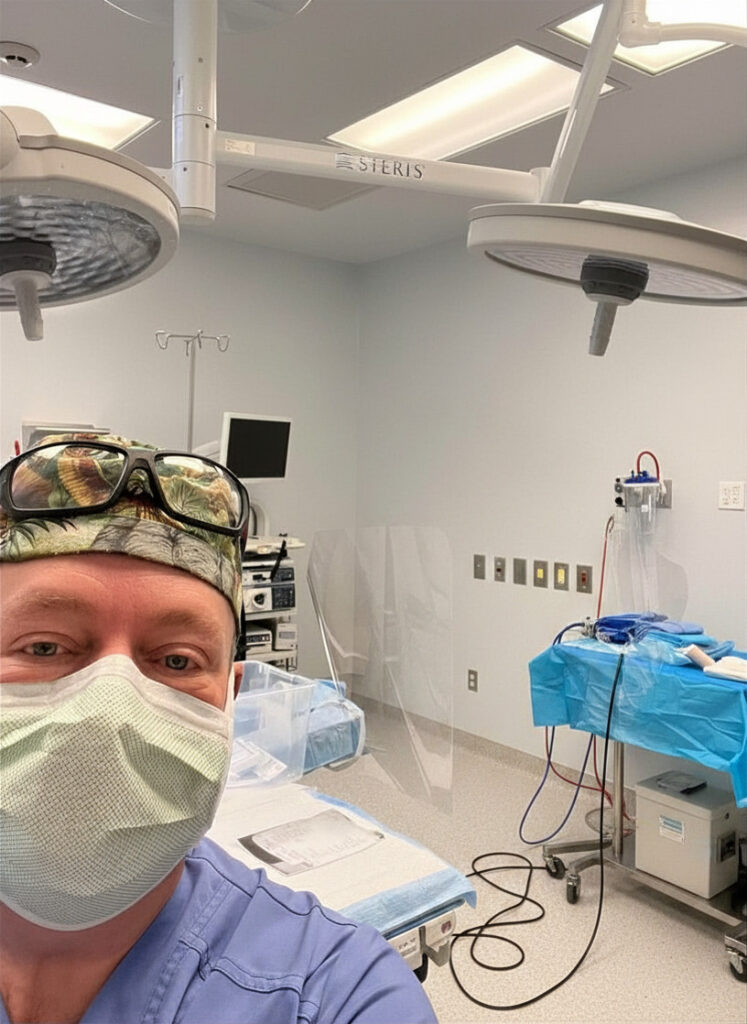
Dr. Scott Nelson DPM in surgery Garland Texas
At Foot and Ankle Medical Clinic, we always look for conservative means of alleviating foot and ankle problems. However, there are circumstances when conservative treatment alone will not produce the desired outcomes and surgical intervention may be necessary.
Once surgical intervention has been determined to be a viable course of action, we work closely with our patients to keep them informed from the point of evaluation, pre-op, the surgical procedure itself and the post-operative course of care. Our skilled podiatrists Dr. Nelson and Dr. Nguyen are our trusted and experienced foot and ankle surgeons in Garland and Wylie Texas.
Minor procedures can be performed under local anesthesia in our office, Foot & Ankle Medical Clinic. More complex surgeries such as reconstructive foot surgeries are done in the hospital with mild sedation and local anesthesia.
It is always our objective to get our patients back to work quickly, back to the recreational activities they love and to restore the quality of life that they deserve. Call us at (972) 414-9800 or click to schedule a podiatrist appointment today!
Foot & Ankle Surgery in Garland & Wylie, TX
When Conservative Foot & Ankle Treatment Isn’t Enough
Surgery is not the first answer for every foot or ankle problem. At Foot & Ankle Medical Clinic, our podiatrists generally consider conservative treatment whenever it is appropriate. Many conditions can be managed with changes in footwear or activity, medication, immobilization, custom orthotics, injections or other nonsurgical treatments.
There are times, however, when a painful deformity, significant injury or other foot and ankle condition does not respond adequately to conservative care. In those cases, foot or ankle surgery may provide the best opportunity to correct the underlying problem, reduce pain and improve function.
Foot & Ankle Medical Clinic provides surgical evaluation and care for patients at both of our Dallas area foot and ankle clinics in North Texas.
Scott Nelson, DPM sees patients at our Garland, TX office. Dr. Nelson completed extensive surgical training, including a three-year surgical program in Denver, Colorado.
Hang Nguyen, DPM sees patients at our Wylie, TX office. Dr. Nguyen completed residency training in foot and ankle surgery at Hunt Regional Medical Center in Greenville, Texas and treats a wide range of surgical and nonsurgical foot and ankle conditions.
Our podiatrists can evaluate the problem and discuss the full range of treatment options with you if foot or ankle pain is interfering with walking, work, exercise or everyday activities.
Schedule an appointment with Foot & Ankle Medical Clinic or call (972) 414-9800.
When Is Foot or Ankle Surgery Considered?
Many patients who visit a podiatrist are relieved to learn that surgery is not necessary.
The decision to recommend surgery depends on several factors, including:
- The condition causing the problem
- How severe the symptoms have become
- Whether the condition is getting worse
- How much the problem affects walking or daily activity
- Whether conservative treatment has provided adequate relief
- The patient’s overall health and activity level
- Whether a structural deformity or unstable injury needs correction
For some patients, surgery becomes appropriate after nonsurgical treatments no longer control the symptoms. In addition, others patients with certain displaced fractures, severe tendon injuries or significant structural deformities, surgery may be considered earlier. The goal is not to operate simply because a condition exists. The goal is to choose the treatment that makes the most sense for the individual patient’s condition, symptoms and lifestyle.
Common Foot & Ankle Conditions That May Require Surgery
Foot and ankle surgery covers a wide range of procedures. The operation recommended for one patient can be completely different from the procedure needed for another. Conditions that may sometimes require surgical treatment include the following listed below.
Bunion Surgery
A bunion is a structural deformity involving the joint at the base of the big toe. Many bunions can initially be managed with wider shoes, padding, activity modification and other conservative measures. Surgery may be considered when a bunion causes persistent pain, interferes with walking or makes it increasingly difficult to wear normal footwear.
Bunion surgery is designed to address the underlying alignment of the bones and joint rather than simply removing the visible bump. Visit the following link for additional information at the National Library of Medicine where it explains bunion surgery and what the procedure may involve. You can also learn more about bunions and hammertoes at Foot & Ankle Medical Clinic.
Hammertoe Surgery
A hammertoe causes one of the smaller toes to bend abnormally. Early hammertoes may remain flexible and can often be managed conservatively. However, as the condition progresses, the toe may become rigid and increasingly painful.
Surgery may be considered when a hammertoe:
- Becomes rigid
- Causes persistent pain
- Repeatedly develops painful corns or pressure areas
- Interferes with walking
- Makes normal shoes difficult to wear
- Does not respond adequately to conservative treatment
The exact procedure depends on the severity and flexibility of the toe.
The National Library of Medicine provides additional information about hammertoe repair and recovery.
Foot Fracture Surgery
Many broken bones in the foot heal successfully without an operation. However, certain fractures may require surgery when the bones are displaced, unstable or unlikely to heal correctly without surgical stabilization.
The location of the fracture matters. Injuries involving the metatarsals, midfoot and other areas of the foot can require very different treatment plans. Learn more on our Foot Fracture page.
Ankle Fracture Surgery
Ankle fractures range from relatively stable injuries to more complex fractures involving multiple bones and the ankle joint. Surgery may be recommended when the broken bones are significantly out of alignment or the ankle has become unstable.
When ankle fracture surgery is necessary, the bones may need to be returned to proper alignment and stabilized while they heal. MedlinePlus provides additional information about ankle fractures and when surgery may be necessary.
Achilles Tendon Repair
The Achilles tendon connects the calf muscles to the heel and plays a major role in walking, running and pushing off the foot. Some Achilles tendon injuries can be treated without surgery. A significant or complete rupture may sometimes require surgical repair depending on the patient’s injury, health, age and activity needs.
The National Library of Medicine explains that both surgical and nonsurgical treatment may be considered for certain Achilles tendon tears. Read more about Achilles tendon repair.
Flatfoot Reconstruction & Structural Foot Surgery
Some patients develop painful structural problems that affect the alignment and function of the entire foot. Reconstructive surgery may sometimes be considered when a severe or progressive flatfoot deformity causes ongoing pain and difficulty walking despite conservative care efforts.
Dr. Hang Nguyen has training and experience in the management of flatfoot conditions, including reconstructive treatment when appropriate. Because flatfoot problems vary considerably, surgical planning depends on which bones, joints, tendons and ligaments are contributing to the deformity.
Foot Surgery vs. Ankle Surgery
Patients sometimes use the terms foot surgery and ankle surgery interchangeably, but the type of procedure depends on the structure that is injured or causing symptoms.
Foot surgery may involve conditions affecting:
- Toes
- Metatarsal bones
- Bunions
- Hammertoes
- Tendons
- Midfoot joints
- Heel
- Structural deformities
Ankle surgery may involve:
- Ankle fractures
- Ligament injuries
- Tendon injuries
- Instability
- Joint problems
- Other structural conditions affecting the ankle
A careful examination is necessary before determining whether surgery is needed and which procedure is appropriate.
What Happens Before Foot or Ankle Surgery?
The process begins with an accurate diagnosis.
Your podiatrist will review your symptoms, medical history and previous treatments and perform a physical examination.
Depending on the condition, diagnostic testing may include:
- X-rays
- MRI
- CT imaging
- Ultrasound
- Other testing when appropriate
If surgery is being considered, your podiatrist will explain:
- What is causing the problem
- Why surgery is being recommended
- Whether reasonable nonsurgical options remain
- What the procedure is designed to correct
- Where the procedure will be performed
- What to expect during recovery
- How long weight bearing may be restricted
- When you may be able to return to work, driving and normal activities
This is also the time to discuss medications, medical conditions and other factors that could affect surgery or healing.
Where Is Foot & Ankle Surgery Performed?
The location depends on the procedure.
Certain minor procedures may be performed in the office using local anesthesia. More involved foot and ankle surgeries are typically performed in an appropriate hospital or surgical facility.
The type of anesthesia also varies according to the procedure and individual patient. Your podiatrist will explain the recommended surgical setting and what to expect well before the day of the procedure.
What Is Recovery Like After Foot or Ankle Surgery?
Recovery varies considerably. A patient having a relatively minor toe procedure will have a very different recovery from someone undergoing fracture repair or reconstructive foot surgery.
Depending on the operation, recovery may involve:
- A surgical shoe
- Walking boot
- Splint or cast
- Crutches or another mobility aid
- Temporary limits on weight bearing
- Elevation to control swelling
- Incision and wound care
- Follow-up appointments
- Repeat X-rays
- Physical therapy or rehabilitation
- A gradual return to normal shoes and activity
Following postoperative instructions is an important part of successful healing.
Patients should also understand that less pain does not necessarily mean that bones, tendons or other tissues have finished healing. Returning to unrestricted activity too quickly can place unnecessary stress on the surgical area.
Your podiatrist will guide you through each stage of recovery based on the procedure you had.
Conservative Treatment Comes First When Appropriate
Having surgical training does not mean that every foot problem needs an operation. Both Dr. Nelson and Dr. Nguyen evaluate nonsurgical options when they are appropriate for the condition.
Depending on the diagnosis, conservative care may include:
- Changes in footwear
- Activity modification
- Immobilization
- Bracing
- Medication
- Injections
- Padding
- Physical therapy
- Stretching or strengthening
- Custom orthotics
For sports-related foot and ankle conditions, visit our Sports Medicine page.
If conservative treatment is working well, surgery may not be necessary. When it isn’t working, having a podiatrist who can provide both nonsurgical and surgical options allows the treatment plan to progress based on the patient’s needs.
Foot & Ankle Surgery in Garland, TX
Patients looking for foot and ankle surgery in Garland, Texas can schedule an evaluation with Scott Nelson, DPM at Foot & Ankle Medical Clinic.
Dr. Nelson graduated from the Ohio College of Podiatric Medicine and completed extensive postgraduate training, including a three-year surgical program in Denver, Colorado. He treats a wide range of foot and ankle conditions and takes a conservative approach whenever nonsurgical treatment is appropriate.
When surgery becomes necessary, Dr. Nelson works with patients to explain the diagnosis, available options, expected recovery and postoperative care.
Foot & Ankle Medical Clinic of Garland
3930 Naaman School Road, Suite C
Garland, TX 75040
(972) 414-9800
Visit our Garland podiatry office page for directions and additional information.
Foot & Ankle Surgery in Wylie, TX
Patients needing foot and ankle surgical care in Wylie, Texas can see Hang Nguyen, DPM at Foot & Ankle Medical Clinic.
Dr. Nguyen earned her Doctor of Podiatric Medicine degree from the California School of Podiatric Medicine and completed her residency training in foot and ankle surgery at Hunt Regional Medical Center in Greenville, Texas.
Her training includes management of conditions such as flatfoot deformities, bunions, hammertoes, fractures and other foot and ankle problems requiring both conservative and surgical care. Dr. Nguyen takes time to explain treatment options so patients understand what is being recommended and why.
Foot & Ankle Medical Clinic of Wylie
2300 FM 544, Suite 230
Wylie, TX 75098
(972) 414-9800
Visit our Wylie podiatry office page for location information and directions.
Frequently Asked Questions About Foot & Ankle Surgery
Do all foot and ankle problems eventually need surgery?
No. Many foot and ankle conditions can be successfully treated without surgery. Surgery is generally considered when the condition is severe, structurally unstable or continues to cause significant problems despite appropriate conservative treatment.
What kind of doctor performs foot surgery?
Podiatrists receive medical and surgical training specifically involving conditions of the foot and ankle. Dr. Scott Nelson and Dr. Hang Nguyen have both completed advanced surgical training in foot and ankle care.
What types of foot problems may require surgery?
Examples include painful bunions, rigid hammertoes, certain fractures, severe structural deformities, tendon injuries and other conditions that have not responded adequately to conservative treatment.
Can ankle problems be treated by a podiatrist?
Yes. Podiatrists treat many conditions involving both the foot and ankle, including ankle pain, fractures, tendon injuries and instability.
Will I be able to walk after foot surgery?
That depends on the procedure. Some surgeries allow limited or protected weight bearing relatively early, while others require a period with little or no weight placed on the foot. Your surgeon will give you specific instructions.
How long does recovery from foot or ankle surgery take?
There is no single recovery period. Healing time depends on the procedure, the tissues involved, your overall health and the physical demands of your normal activities.
How do I know if I really need surgery?
Your podiatrist should be able to explain why surgery is being recommended, what nonsurgical options have been considered and what the procedure is expected to accomplish. If conservative treatment remains a reasonable option, that should also be part of the discussion.
Schedule a Foot & Ankle Surgery Consultation in Garland or Wylie
If ongoing foot or ankle pain is limiting your daily life and conservative treatment has not provided enough relief, it may be time to discuss whether another treatment option is appropriate.
Foot & Ankle Medical Clinic provides comprehensive podiatric and surgical foot and ankle care in Garland and Wylie, Texas.
Scott Nelson, DPM provides care at our Garland office, and Hang Nguyen, DPM provides care at our Wylie office. Both doctors have advanced surgical training and work with patients to determine whether surgery is actually necessary before developing an individualized treatment plan.
Call (972) 414-9800 or request an appointment online to schedule an evaluation.